Blog: Teacher Policies
Perspectives
SREB's Teacher Workforce Blog
From shortages to solutions, thoughtful articles on policy and data that affects educators, from SREB staff and guest authors.
How States Can Elevate the Teaching Profession
Restoring respect and value
Good schools depend on excellent teachers, in every classroom. SREB is helping states examine and redesign state policies to elevate the profession and end teacher shortages.
I want my daughter to have the best teachers every school year. What parent doesn’t? Yet in too many schools, the only teachers available are uncertified or brand new, with no experience.
Impact of teacher shortages in most states far-reaching
 When students don’t have good
teachers, it can affect their cognitive growth — and over time
can result in measurable economic loss.
When students don’t have good
teachers, it can affect their cognitive growth — and over time
can result in measurable economic loss.
Teacher shortages, therefore, are the type of crisis that “can put an entire society at risk,” said Nicole Smith, the chief economist and research professor at the Georgetown University Center on Education and the Workforce.
Respect (and Pay) Our Teachers, Or Lose Them
 As state education budgets suffer during this pandemic, the teaching profession simply cannot absorb the kind of blow it took in the last recession. Teacher salaries dropped substantially then, and today, a decade later, they’re still lower on average than before the Great Recession. Morale has dropped, too, according to surveys, and turnover has risen as budgets and teacher supports decrease. We can’t afford to repeat the same mistakes in this current climate, another recession aggravated by COVID-19.

COVID-19 Effects on the Teacher Workforce
In April, my mom called me with the news that my high school chemistry teacher, Mr. Metcalfe, who was rounding out his 42nd year of teaching, had died from COVID-19. I knew him from class, of course, but I also went to school with his son for 13 years and his family attended my grandparent’s church.
He was respected, loved and honored for his excellent teaching. His funeral was an all-day parade of cars through the high school parking lot, where community members waved and shouted condolences to his family. My mom said the cars stretched down the street for miles.
How States Can Reduce College Debt for Future Teachers
 A major issue for my generation, the millennials, and for Gen Z as well is deep, suffocating student debt. For those who want to enter teaching, a career that is not compensated handsomely, this debt can be even more daunting.
Many teacher candidates work full- or part-time jobs in addition to attending classes. When they enter their student teaching period, whether for a semester or a year, these candidates are expected to give over their time fully to student teaching, which makes working nearly impossible.

How Some Oklahomans Want to Retain Beginning Teachers
Many states have a critical issue with retaining early-career teachers, no matter their preparation pathway. Oklahoma has one of the more severe teacher shortages, with 57% of new teachers leaving the profession by their fifth year, compared to 44% nationwide.
One of the top reasons early career teachers leave is lack of support. Better early career support would help solve the costly problem of having to prepare and hire a new teacher each time another leaves the profession.
A Long-Term Solution to Teacher Shortages
Finding the Root of the Problem
We’ve all heard the saying “You can’t see the forest for the trees.” When it comes to state policies affecting the teacher workforce, it’s important to see both.
Teachers make life-long impressions on thousands of students — over 3,000 in an average career — and help raise every generation to understand the world and become productive, well-rounded citizens.
Online Professional Development Support for Educators
 As we enter our second and third
weeks of school closures and social distancing, I am amazed and
proud of our educators. I see school systems scrambling to feed
children. I see teachers preparing lessons, packets and online
resources. I see principals giving weekly messages, reading
bedtime stories online, leading virtual parades and calling every
teacher for weekly check-ins. I see heroes. But to be
quite honest, I saw these heroes before the advent of COVID-19.
As we enter our second and third
weeks of school closures and social distancing, I am amazed and
proud of our educators. I see school systems scrambling to feed
children. I see teachers preparing lessons, packets and online
resources. I see principals giving weekly messages, reading
bedtime stories online, leading virtual parades and calling every
teacher for weekly check-ins. I see heroes. But to be
quite honest, I saw these heroes before the advent of COVID-19.
Right now, our teachers need extra support.

How Can a Roundtable on Education Human Capital Help Your State?
Another school year has started, and nearly every state in the SREB region is facing major human capital challenges including teacher shortages. Schools now face shortages not only in STEM courses and special education but in most subject areas.
Using Data to Transform Teacher Preparation
The SREB Teacher Preparation Commission has called on state leaders to build data systems that will improve preparation programs. The commission identified three groups that would benefit from robust and accessible data:
- Individuals choosing where to enroll
- Preparation providers interested in improving their strategies
- Policymakers considering changes to state requirements
Making Sense of Changes to Teacher Preparation and Licensure
SREB state legislators introduced over 4,600 education bills in 2019 regular sessions. At least 850 of these bills will become law, with roughly one hundred this year relating to teachers and principals. Here’s how seven notable bills align with SREB’s Teacher Preparation Commission recommendations.
Getting the Balance Right
Reconsidering the Mix of Teacher Licensure Measures
The SREB Teacher Preparation Commission called on state leaders to adopt practice-based assessments. These tests assess candidates’ readiness to lead a classroom and to apply lessons learned during coursework and clinical experiences.
Practice-based assessments have diagnostic value, meaning they provide performance data that educator preparation programs can use to identify strengths and opportunities for improvement. State agencies could use the assessment data to determine how they will provide technical assistance to preparation programs.
Teacher Salary Proposals
SREB states, 2019 and 2018
Teacher salaries are in the news, and we’ve been getting some questions about what actions SREB states are taking during this year’s legislative sessions. Here are proposals so far in 2019. Bonus: 2018 actions.
How States Can Get Teacher Evaluation Systems Right
Insights from our partners at Education First
High-quality teacher evaluations are an important component of comprehensive systems to ensure that all students are being taught by effective teachers. From evaluations, districts and states can generate data that can positively impact teachers and students in numerous ways. This is why states have invested so much in them – since 2009, 37 states have updated their evaluation systems – and why they are so important to get right.
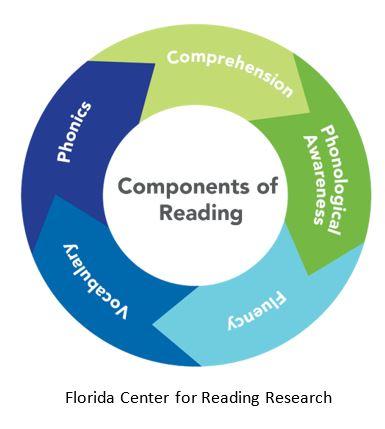
Are teachers prepared to teach reading?
Research shows a gap between what we know about reading and how teachers are prepared to teach it
Reading is the foundation for learning.
The research is clear: Students who are not reading proficiently by the end of third grade are much more likely to face poor academic outcomes. For this reason alone, we know it is incredibly important that children learn to read well early in elementary school and continue to build on those reading skills throughout the rest of school.